Discover the problem - The Japan factor
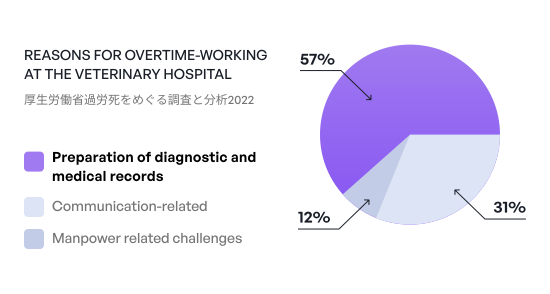
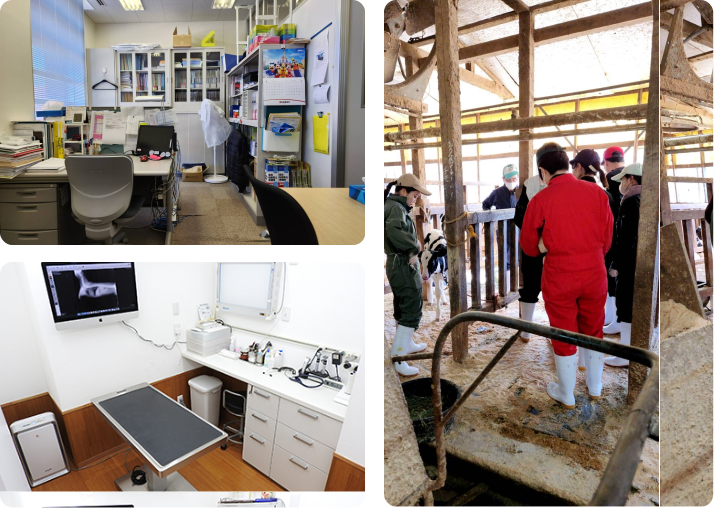
Over 60% of animal hospitals have only one veterinarian on staff, making it essential to utilize veterinary technicians (VT). On the other hand, due to the impact of labor shortages in the veterinary industry, long working hours are increasing, making it necessary to establish systems to improve work efficiency.
To understand the problem through - Heuristic study of user’s footprint
After understanding the core part of Vet’s challenge is to document the medical records efficiently and also convey the prescription insight to pet owners. We took a deeper look at the needs and actions of both doctors (primary role), and pet owners (impacted role).
To understand the problem in - Experts’ perspective
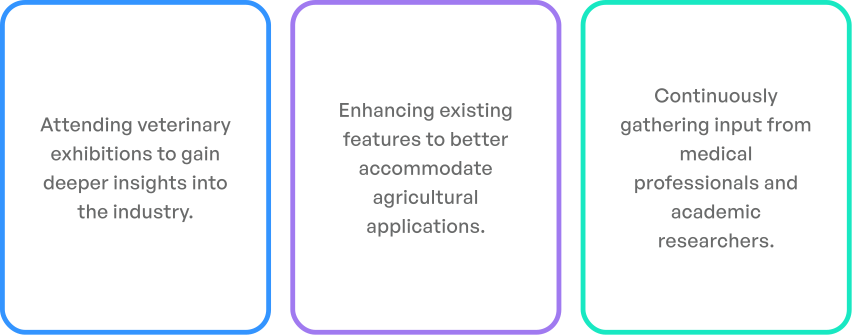
To get a deeper understanding of the problem space, we interviewed several experts from 2 different domains, regarding to “How and what specifically to improve the Veterinarian’s experience of preparing medical records.”
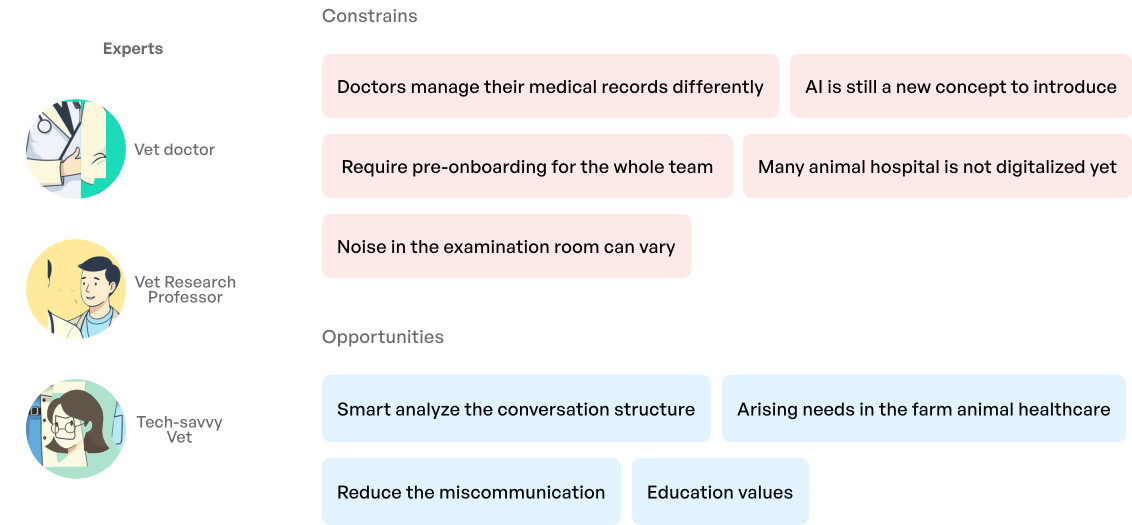
Building user profiles and understanding needs
To understand veterinarians’ needs and challenges in their daily workflows, we conducted in-depth interviews with three vets working at hospitals of different scales. By comparing their workflows, responsibilities, and working styles, we synthesized the findings into a consolidated user profile and an end-to-end journey map.
While veterinarians were the primary users of the service, pet owners play a critical indirect role. To account for their perspectives, we identified potential inputs and concerns from pet owners and modeled provisional profiles and journey assumptions based on the team’s collective experience as pet owners. These insights helped inform service touchpoints while clearly distinguishing validated research from informed assumptions.

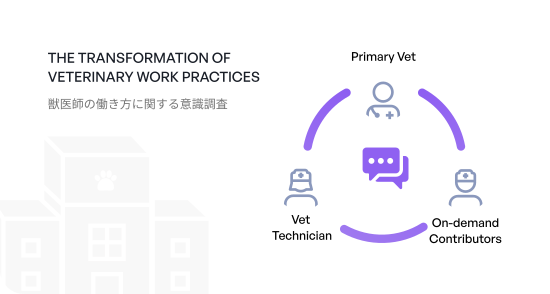
Journey & interaction between key roles
Based on the expert interview with different type of doctors, assistant, researchers etc. we layout the user journey to strategize the opportunity area to focus on first.
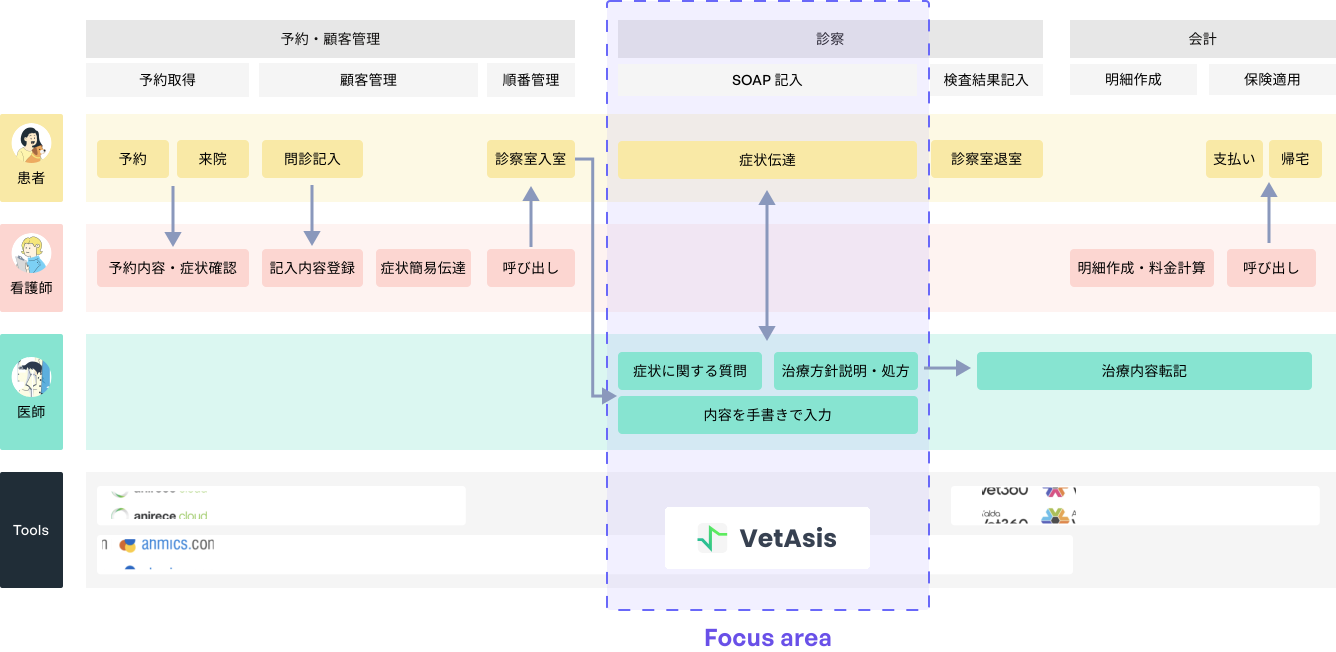
Scope & Focus area
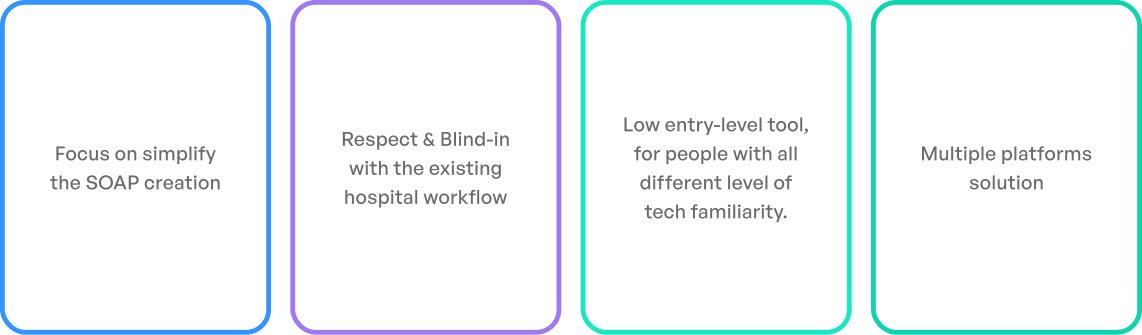
Based on our research, we clarified that our focus should be on not disrupting existing hospital systems, while providing a flexible and easy-to-adopt service. The solution needed to support both digitally advanced hospitals and serve as a lightweight option for less digitized practices.
We also observed that, particularly in Japan, many veterinarians are cautious about adopting new technologies and slower to trust AI-driven solutions. As a result, we placed a strong emphasis on simplicity and approachability when making UX decisions, prioritizing clarity and low learning effort over advanced functionality.
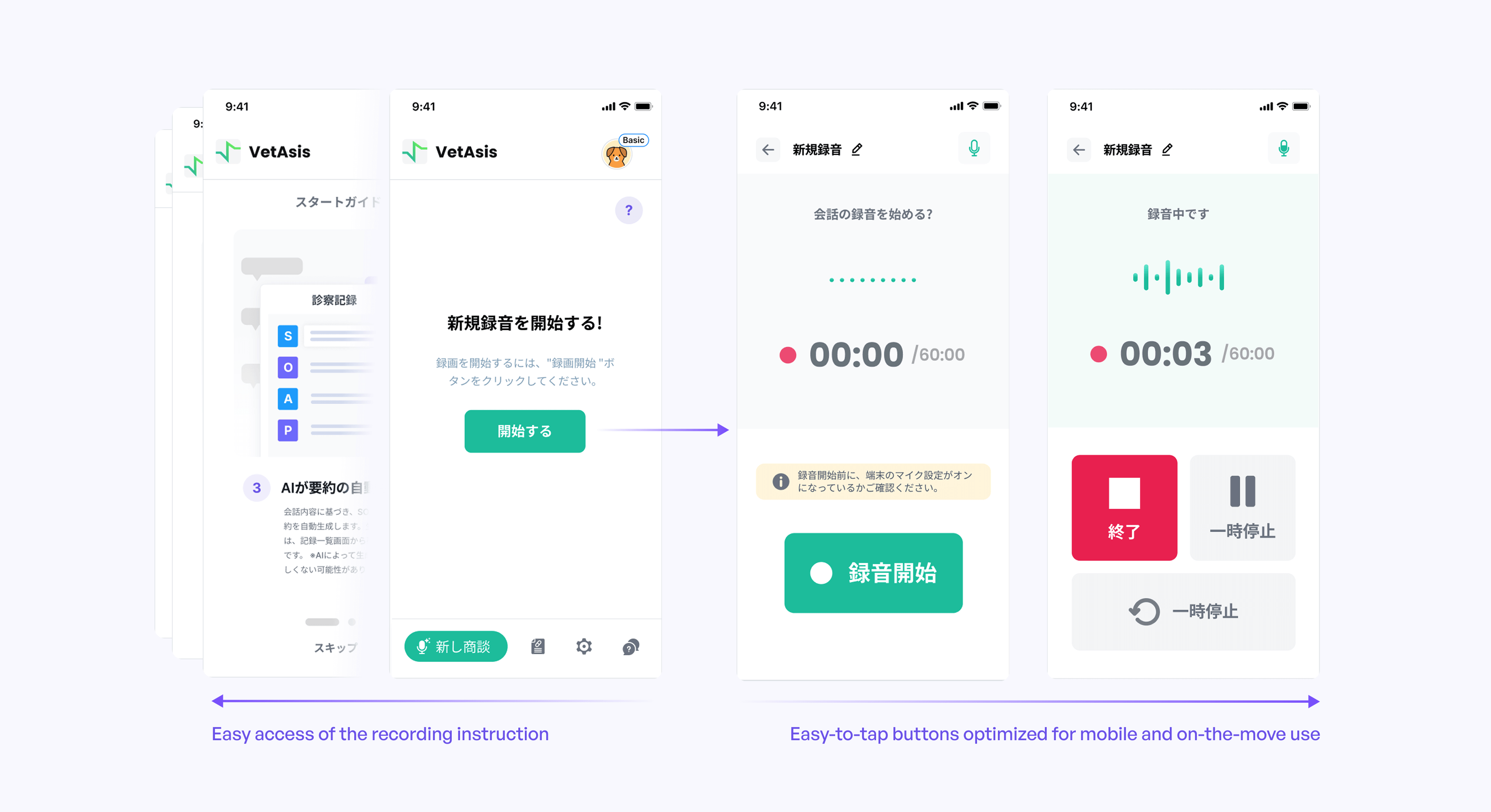
Easy to use recording screen
Based on research insights, I designed the main recording screen to be intentionally simple and focused. Observations showed that veterinarians often move around during examinations, making it difficult to interact with complex interfaces. To address this, I emphasized large, high-contrast recording controls that can be operated quickly with minimal visual attention.
This approach reduced the risk of missed recordings, lowered cognitive load during consultations, and helped veterinarians feel more confident using the tool without disrupting their interaction with patients and pet owners.

Mobile-focused feature
One of the primary use cases involves recording on the go in outdoor, on-site environments. As a cross-platform service, I designed the mobile experience with large, high-contrast, and easily reachable actions that support one-handed use and operation with minimal visual attention.
This approach improved usability in bright or unstable conditions, reduced interaction errors, and increased user confidence—allowing users to focus on their surroundings rather than the interface.
Auto-summarized medical records
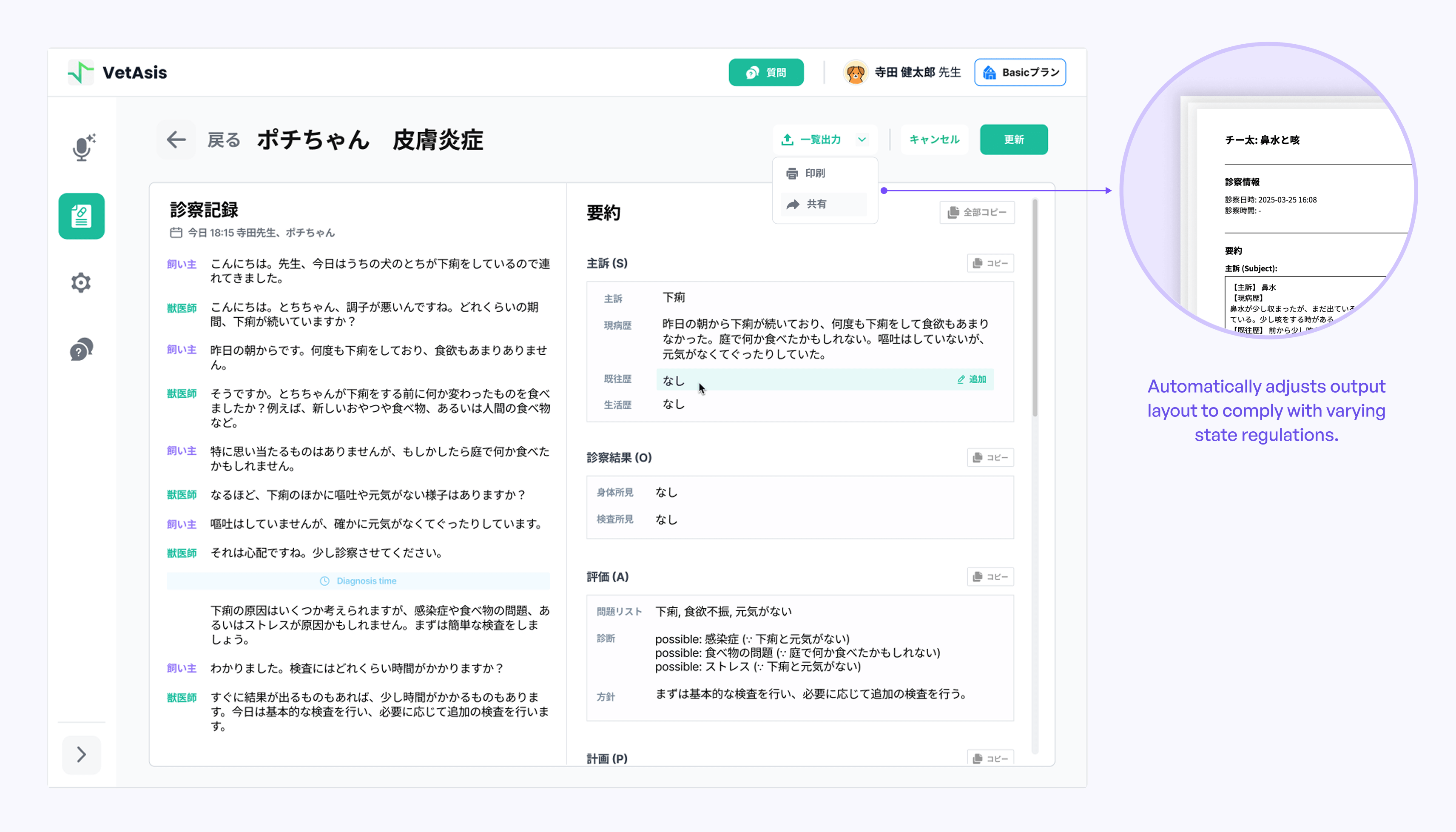
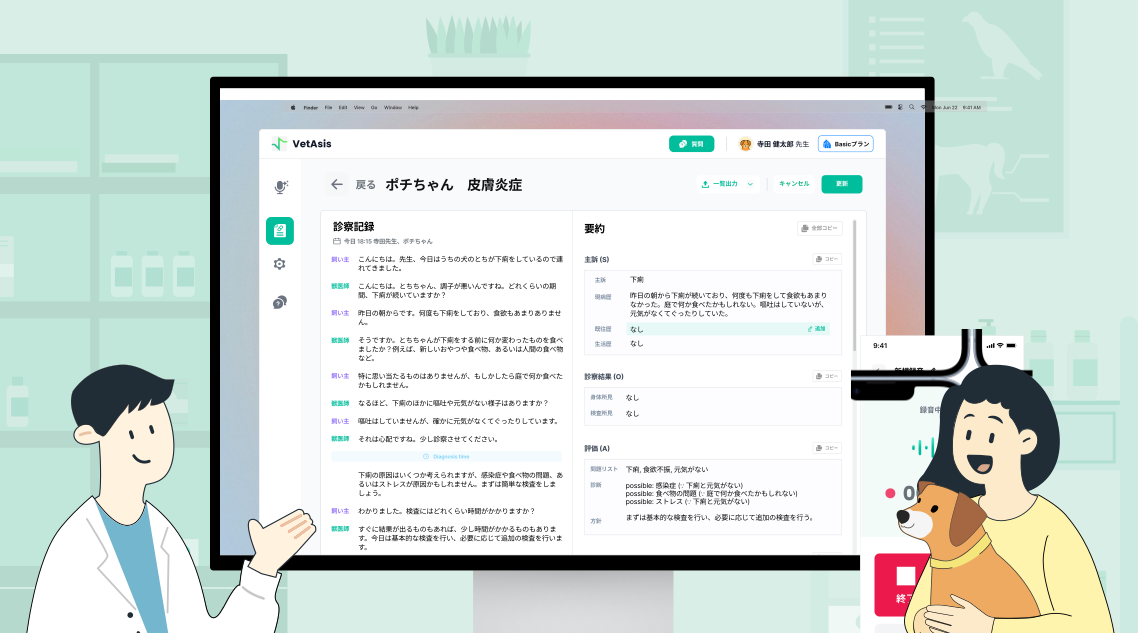
One of the key features I designed was AI-powered medical record generation. Research showed that veterinarians commonly document cases using the SOAP format, so I structured the summary experience to present both raw conversation data and AI-generated records clearly organized by SOAP categories.
To build trust in AI-assisted documentation, I intentionally surfaced the original conversation alongside the generated summaries, allowing veterinarians to verify, edit, and remain in control of the final record. Flexible export options were also provided to ensure the output could be easily integrated into existing hospital workflows, rather than forcing users to adapt to a new system.
Records management
We also created a searchable All Records page to help veterinarians and nurses quickly view, manage, and share records across the hospital. Rather than positioning VetAsis as a full medical record management system, we intentionally limited the scope to tracking active and in-progress records.By clearly surfacing record status and upcoming deadlines, the page reduced coordination friction within teams while avoiding overlap with existing hospital systems. This balance allowed the product to stay lightweight, easy to adopt, and focused on supporting daily clinical workflows without adding unnecessary operational complexity.
.png)
Web plugin
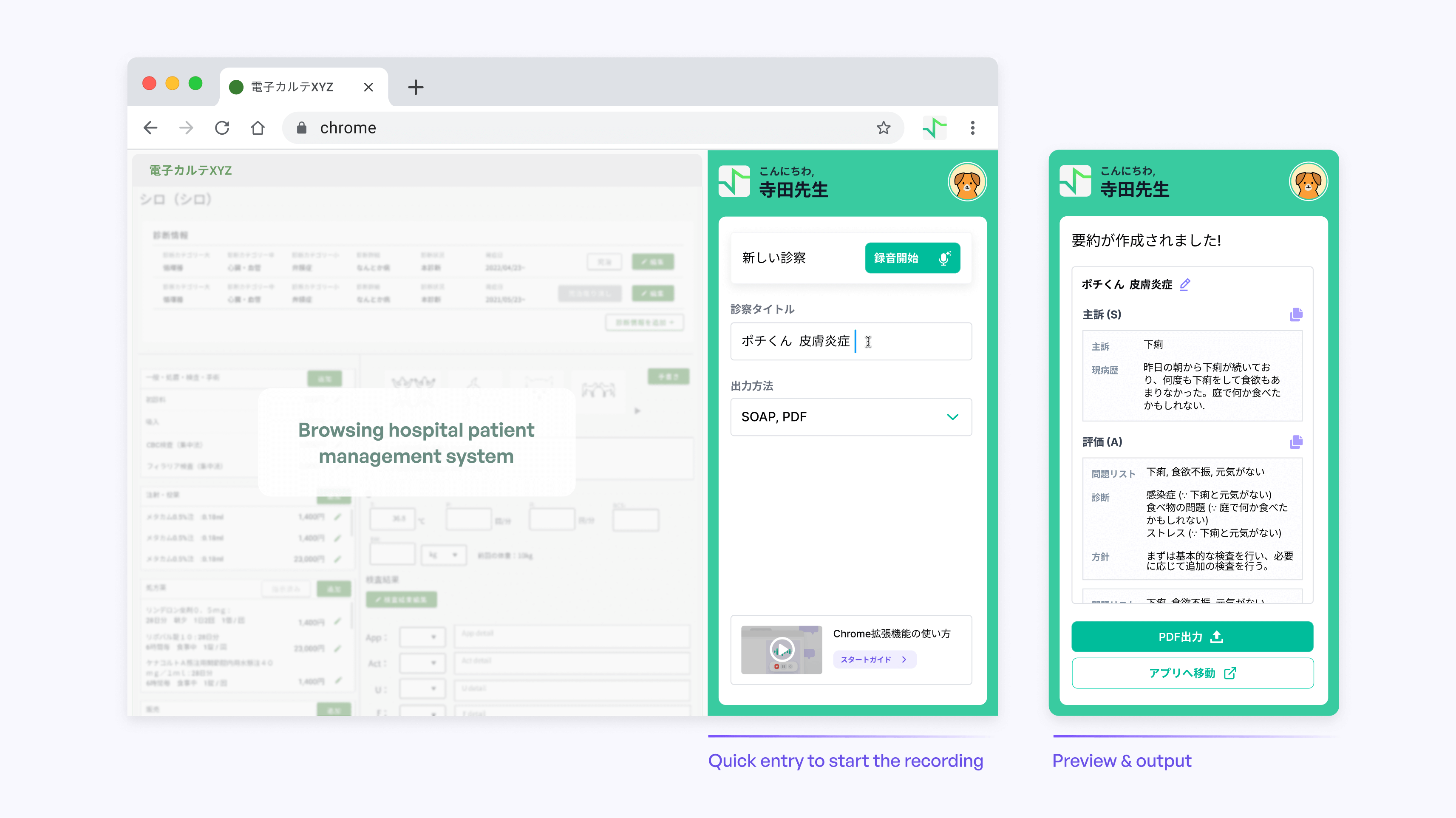
Beyond the standalone app, I explored a lightweight web plugin that allows veterinarians to access core recording controls directly from the Chrome browser while keeping existing hospital systems open. This reduced context switching and supported real-world workflows where multiple systems are used simultaneously.
Designed as a side-panel control surface, the plugin intentionally focuses on essential actions—such as starting, pausing, and stopping recordings—while deferring complex review and editing tasks to the main app. This design balances speed and simplicity with full functionality, and serves as a low-friction entry point for teams to adopt VetAsis without disrupting established workflows.


.svg)